 EN

Logistics & Delivery
From Our Floor to Your Dock: How a Custom Parts Order Actually Ships
Most suppliers send a photo of a container and call it logistics. What a buyer needs to know is narrower: will the parts match the drawing, will they survive the trip, will the paperwork clear customs. Here is the whole sequence, for an order leaving our plant in Shenzhen.
A shipment is the last stage of a process that started when you sent the drawing. Pack badly upstream and no forwarder can fix it — you will simply receive the wrong parts, on time, in a tidy carton. What follows is one order end to end: what is checked before anything is boxed, how it is packed for a sea leg, and which documents travel with the goods.

01
The sample is the first shipment
You do not approve a drawing, you approve a part. Before production opens we build a pre-production sample on the same tooling and process route the order will run — typically 15 to 30 days, depending on geometry, tolerance and finish.
It ships with a dimensional report, so the conversation is about numbers. If a critical dimension is out we correct the tool and re-run, instead of talking you into accepting it and adjusting next batch. Every unit after the first is a copy of whatever you signed.
Send drawings in STEP, STP, IGES, PDF, DXF or DWG. Flag two things early: which features are genuinely critical (one 0.02 mm callout can double tooling cost), and what the part must survive afterwards — load, heat, salt spray, vibration.
02
Inspection happens three times, not once
Final inspection alone tells you what went wrong too late. We check at three points, and all three sets of records ship with the goods.
Incoming material
Alloy grade is verified against the mill certificate before the ingot reaches a furnace — for aluminum die casting, usually ADC12. Certified and uncertified stock look identical in a finished part.
In-process
First-article approval at each operation, then patrol checks through machining, deburring, tapping and finishing. A drifting dimension is caught while it is still a parameter, not a reject pile.
Final, before packing
CMM verification against the drawing, thread and functional gauges, coating thickness on plated or anodised parts, a visual check against the approval sample. Failures are quarantined before the packing bench, never after.
What travels in the box: dimensional report, material certificate, inspection photos. If you need PPAP, FAIR or a customer-specific format, say so at quotation — not the week of shipment.
03
Packing that survives a forty-day ocean leg
Damage in transit is rarely the forwarder's fault. It is a supplier who packed for a van ride and shipped by sea. Three separate risks: surface damage between parts, crushing under stack load, corrosion from weeks of humidity cycling. Each is handled at a different layer.
- Part level. EPE foam, blister trays or bags by finish. Polished and anodised surfaces get a soft interface; machined steel gets VCI film. Parts never touch each other.
- Carton level. Double-wall corrugated, sized to the part, void-filled so nothing shifts. Marked with part number, quantity, PO and country of origin.
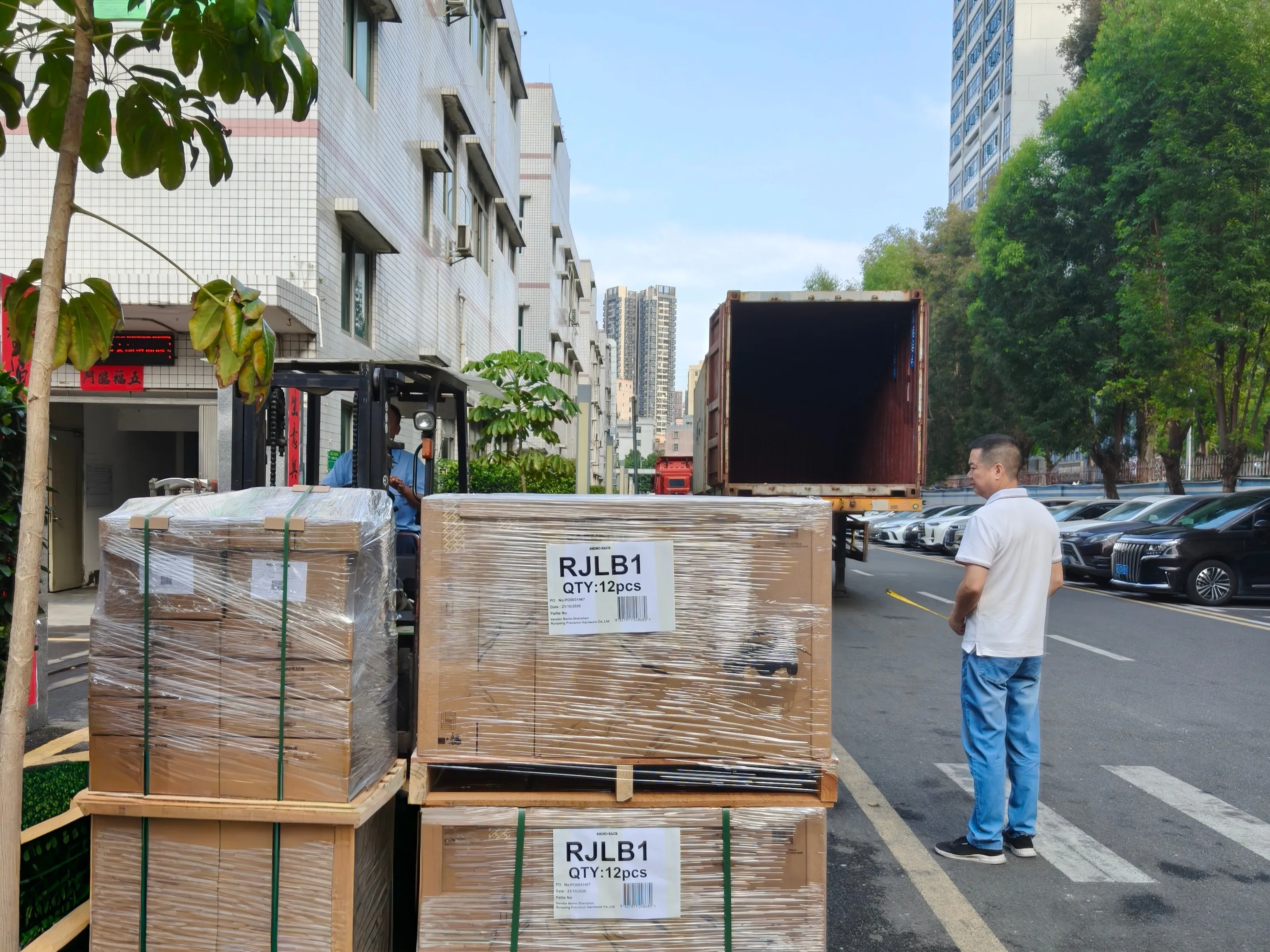
- Pallet level. Fumigation-free plywood, stretch wrap, PP strapping, corner boards. Desiccant for long sea legs and any bare steel.
If your warehouse has a receiving standard — carton weight limit, pallet footprint, barcode format — send it before we pack. Retrofitting labels on arrival costs more than specifying them once.
04
Choosing the mode after you know the weight and the date
Freight is not a preference. It follows from weight and volume, the date the parts must be in your hands, and what a delay costs you. Fix those three and the mode usually picks itself.
| Mode | Best for | Indicative transit | What to watch |
|---|---|---|---|
| Express DHL / FedEx / UPS |
Samples, spares, urgent recovery | 3–7 days, door to door | Cost rises fast above ~100 kg; duties usually billed to receiver |
| Air freight | 100 kg to about 1 t, fixed deadline | 7–12 days, airport to airport | Chargeable weight on volumetric ratio; broker needed at destination |
| Sea LCL | 1–15 cbm, flexible timing | 25–40 days, port to port | Consolidation adds 3–7 days either end; more handling than FCL |
| Sea FCL | 15 cbm and up, or humidity-sensitive | 25–40 days, port to port | Best cost per kg, least handling; sealed at our plant |
Transit times are indicative and confirmed by the forwarder at booking, in writing. Incoterms are agreed at quotation — EXW, FOB Shenzhen, CIF or DDP — and they decide who arranges what, not just who pays. On DDP we need importer-of-record details before booking: a shipment held for a missing tax ID is the most avoidable delay here.
05
The paperwork that clears customs
Goods rarely get stuck because of freight. They get stuck because a document disagrees with the invoice. We prepare the commercial set; you or your broker confirm destination-specific items.
| Document | Prepared by | Why it matters |
|---|---|---|
| Commercial invoice | Us | Value, HS code and Incoterm must match the entry your broker files |
| Packing list | Us | Carton count and weights — the basis for any claim |
| B/L or AWB | Forwarder | Title and release; sea freight is not released automatically on arrival |
| Certificate of origin | Us | CO, FORM A or FORM E, depending on destination and preferential rate |
| Material & test certificates | Us | Alloy grade and properties, required by most industrial and automotive buyers |
| MSDS | Us | Needed for coatings, adhesives and any chemical shipped with the parts |
| Fumigation-free / IPPC declaration | Us | Plywood pallets avoid the fumigation delay solid wood triggers |
Tell us the HS code your broker prefers, even for a repeat part. Classification differs between markets, and a code that is correct in one country can trigger inspection in another.
06
Four things only you can give us
Most delays we see are information problems, not production problems — and each is cheaper to fix by email in week one than at the port.
- Consignee details. Legal name, delivery address, contact person and a phone number customs can actually reach.
- Incoterm and importer of record. For DDP: tax ID, EORI or equivalent, and who is authorised to clear.
- Labeling rules. Barcode type, label size and position, origin marking, whether mixed cartons are acceptable.
- Destination compliance. CE, RoHS, REACH, Prop 65, EPR — tell us which apply and what marking you need. We mark and document to your specification; the regulatory call stays with you.
07
After it lands
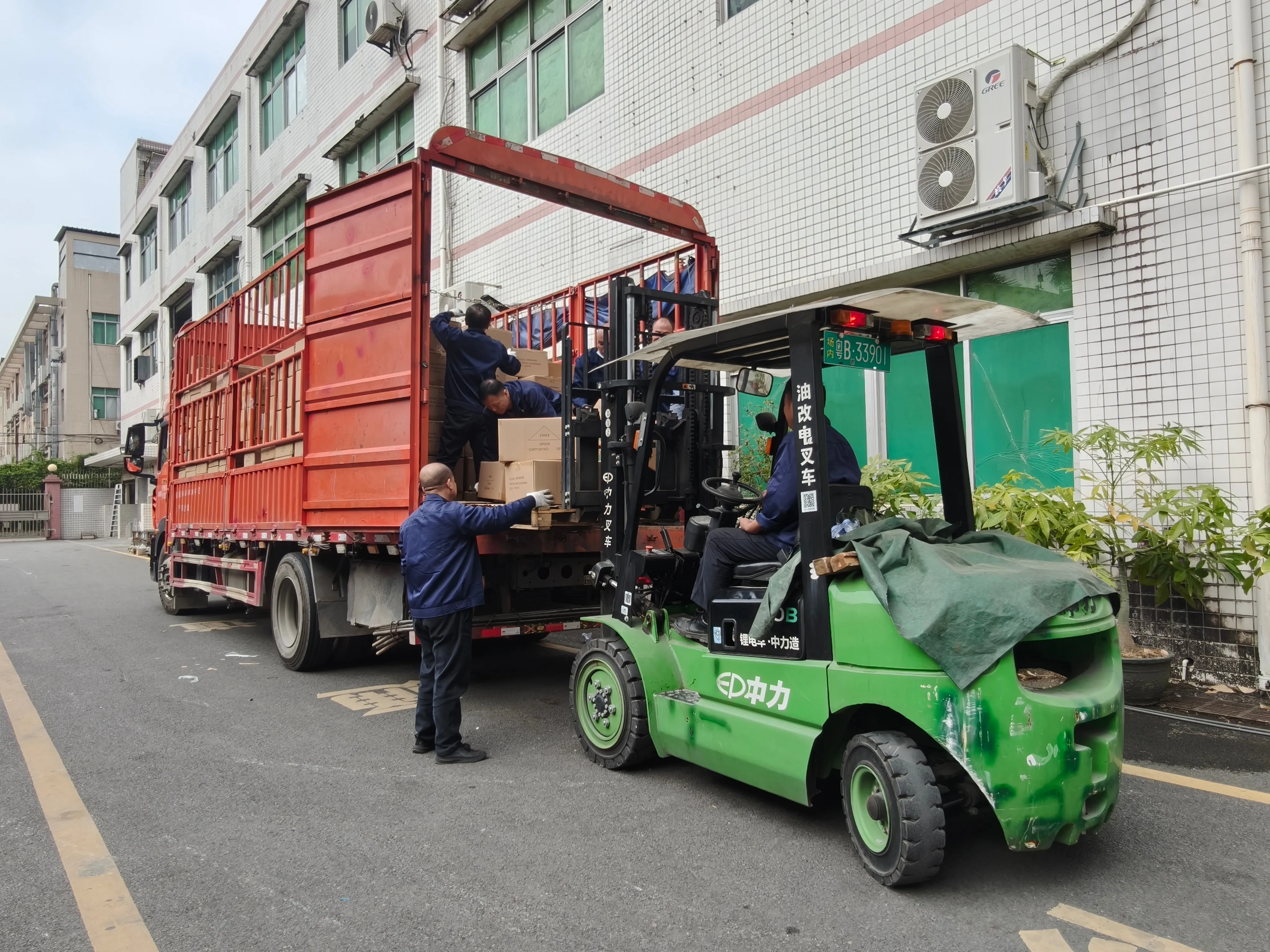
You get loading photos before departure, the tracking reference at booking, and the full document set by email. On arrival, inspect before signing clean: a clean signature is the fastest way to lose a transit claim. If something is wrong, photograph carton, packing and parts inside the claim window and we will back the case with our inspection records. Repeat orders skip most of this — tooling exists, the drawing is approved, only production and inspection run again.
Working to a date, not a promise?
Send the drawing and the deadline. You get tooling cost, unit price and lead time stated separately, so you can see what each decision costs.
- Drawings in STEP, STP, IGES, PDF, DXF, DWG
- Flexible MOQ — from 1 piece for prototypes
- Prototypes in 15–30 days; mass production lead time confirmed in your quotation
- IATF 16949 quality system, 30+ years of OEM production
- Aluminum die casting (ADC12), CNC machining, injection molding, stamping
Lead times, transit times and prices vary with geometry, tolerance, finish and destination. Figures here are indicative; the binding values are those in your quotation and booking confirmation. Shenzhen Runpeng Precision Hardware Co., Ltd. — custom OEM manufacturing for industrial, automotive and electronics buyers.


 Hot News
