Process · 5-Axis Machining
Seven frames from our five-axis cells — what a die-cast housing goes through between raw casting and packed carton, and why the setup matters as much as the spindle.
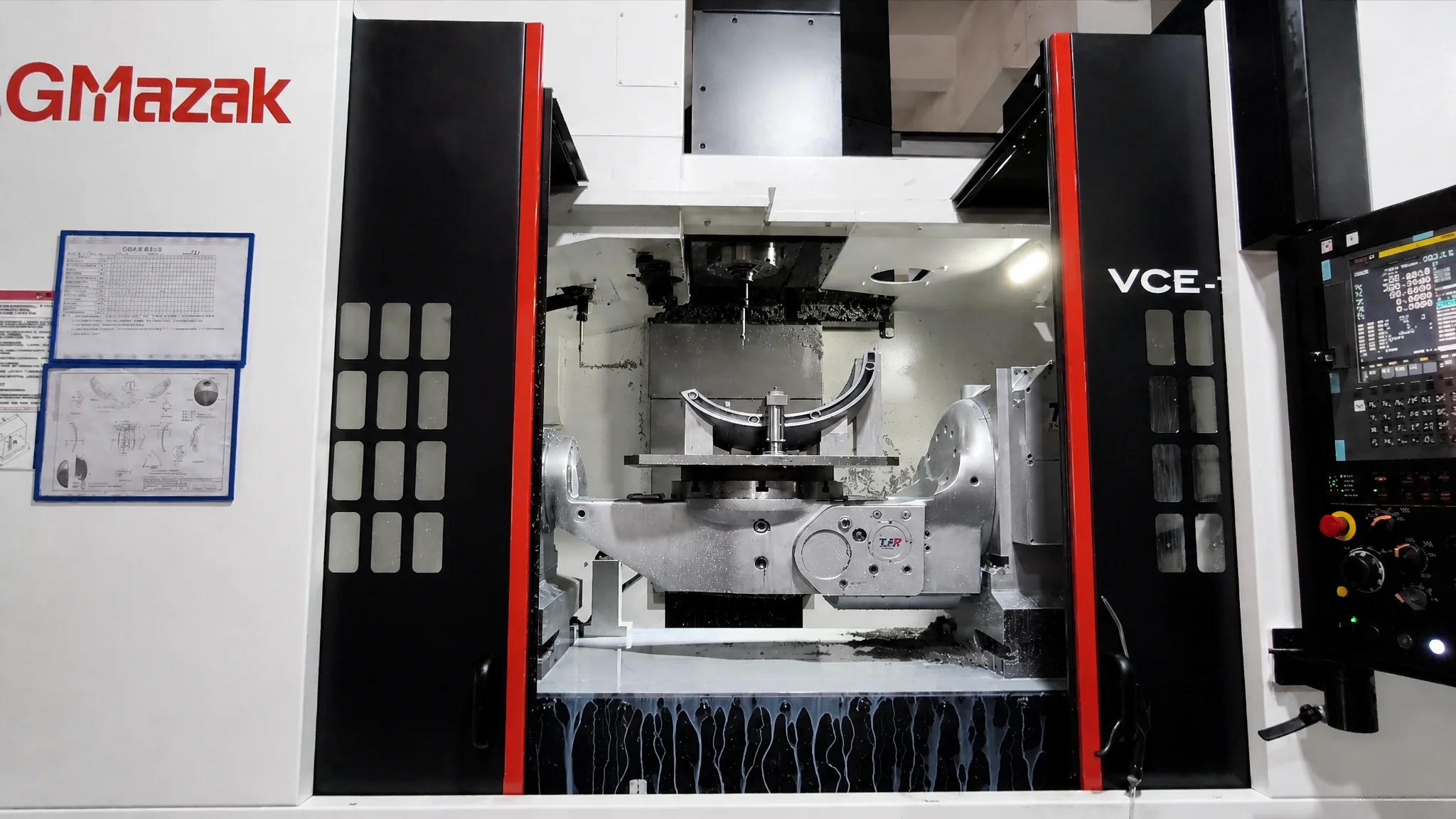
Doors open between operations: a machined aluminium housing still on its fixture, CNC control panel live at the right.
A three-axis machine can reach most surfaces of a housing. What it cannot do is reach them from the same datum. Every re-clamp introduces a new zero point, and every new zero point adds stack-up error to the relationship between bores, faces and mounting holes.
On a trunnion-equipped five-axis cell the part is clamped once. The table tilts and rotates, and the tool approaches the curved wall, the pocket floor and the bolt circle from the angle the drawing intended. Wall thickness stays consistent around the curve, bore-to-face relationships hold, and surfaces blend without the witness line left behind when two operations finally meet.
For a buyer, that is not a marketing line. It is fewer fixture builds, shorter cycle stacks, and a part that assembles without hand-fitting on your line.
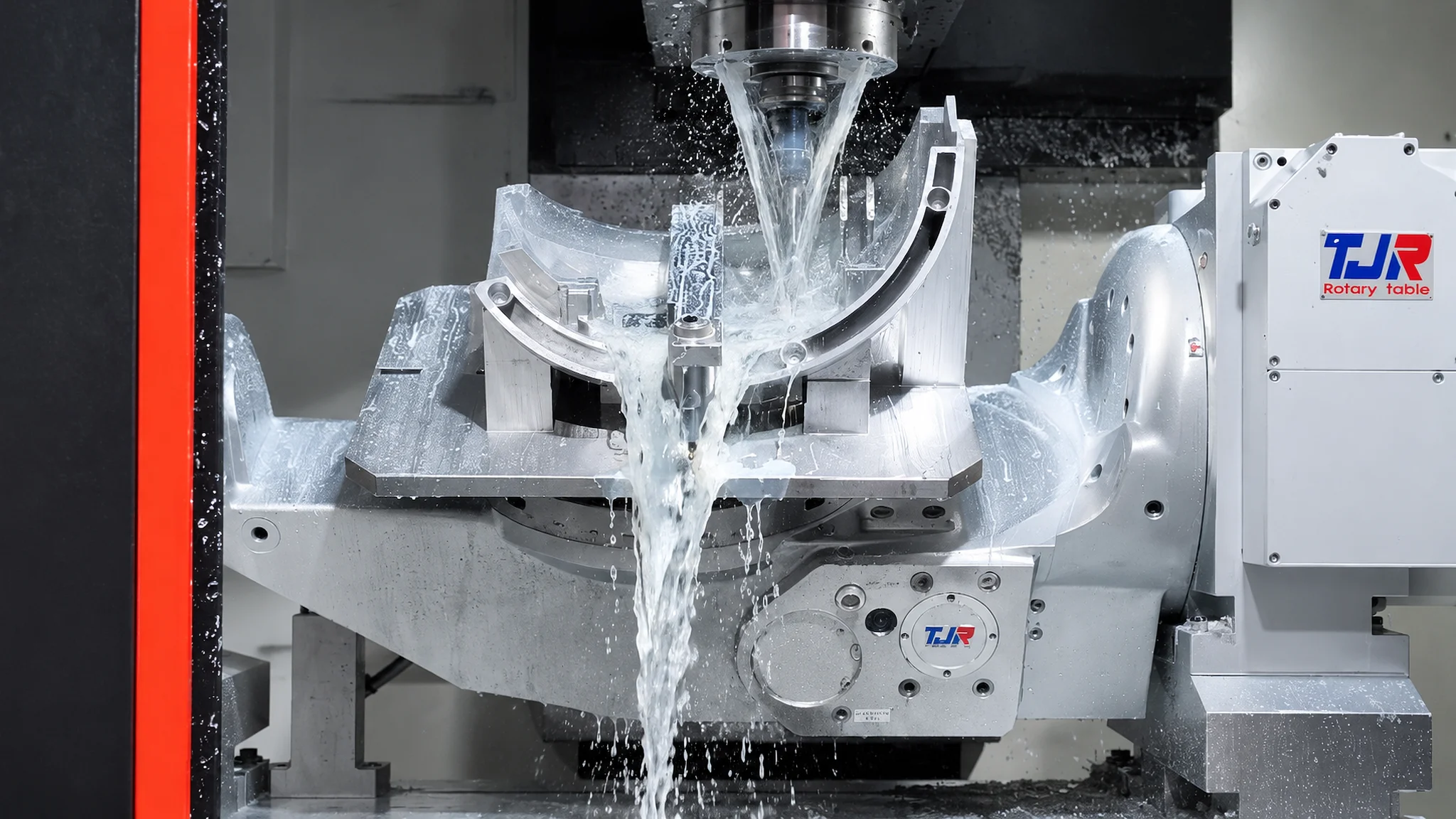
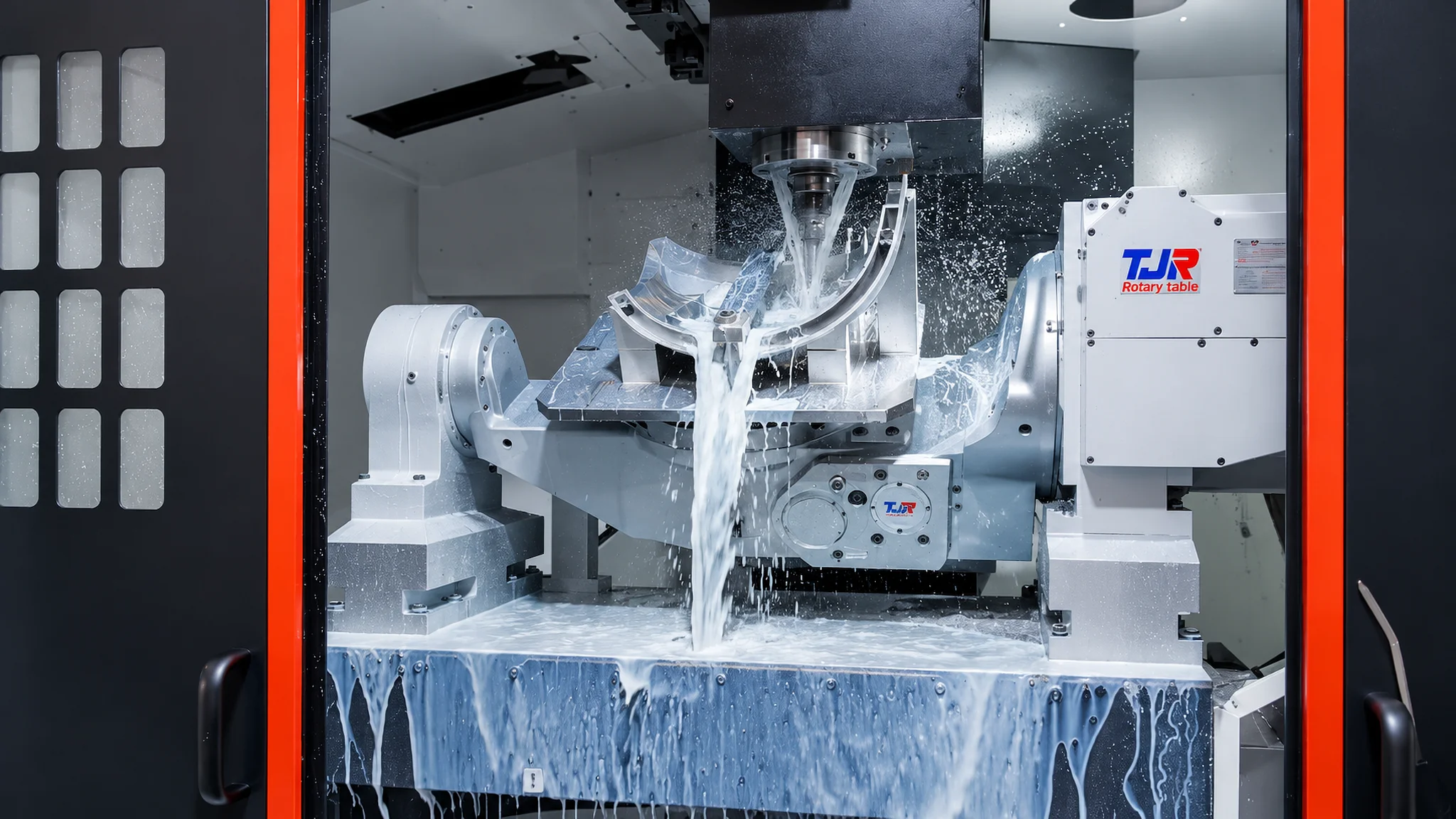
Coolant delivered straight into the cut, and the same housing seen from the operator side. Both frames were taken mid-cycle.
The spindle gets the attention; the workholding does the quiet work. The housing below is held between trunnions on a rotary table, supported close to the cutting zone so a thin wall cannot deflect under load. Coolant arrives through the tool and from two external jets at once — steady chip evacuation, no burn marks on the finished surface.
Notice that the coolant is still running in every frame. These were not shot on a display stand with the machine wiped down. A machining photo is only worth reading when the cut is actually happening.
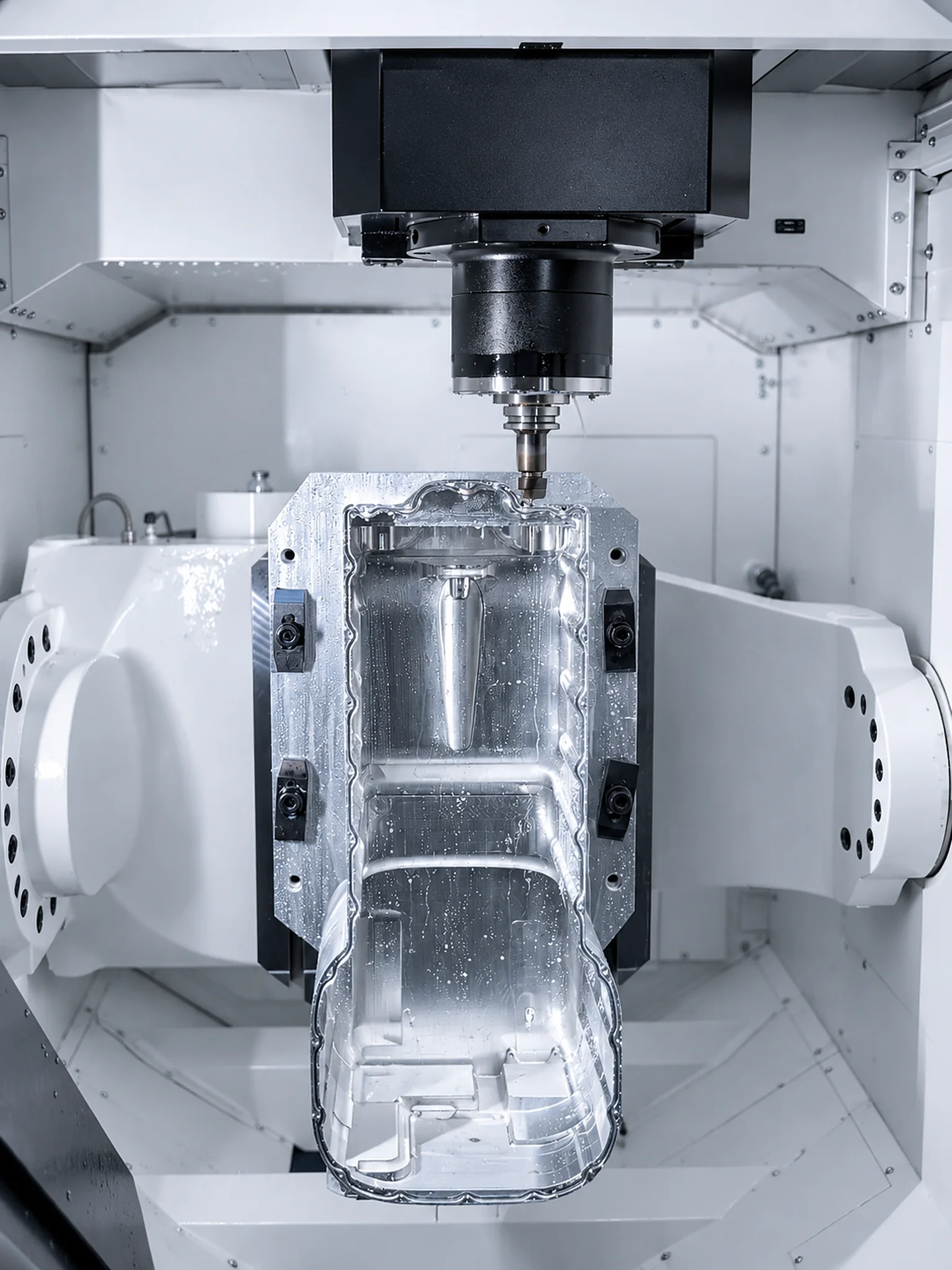
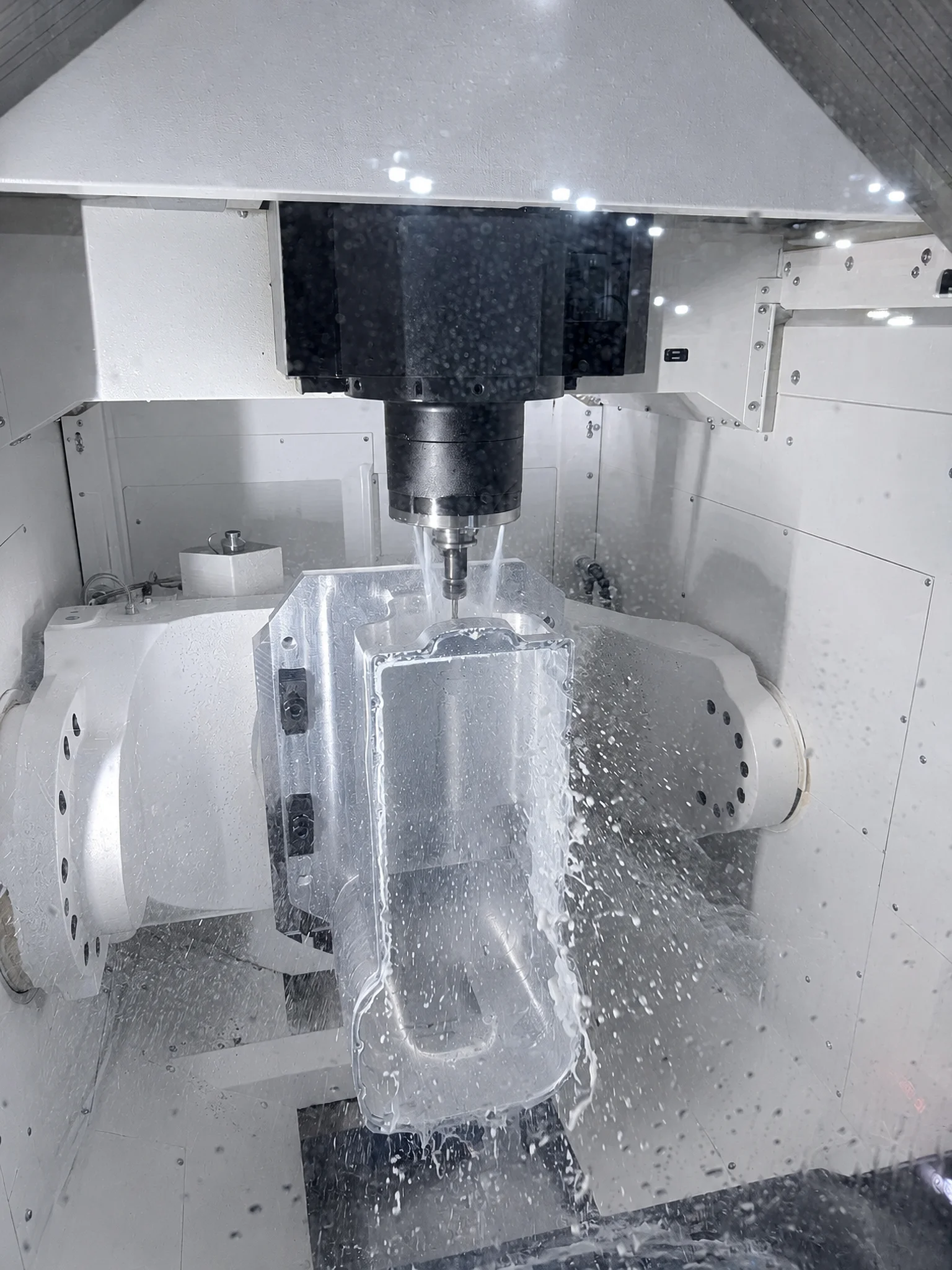
Left: tall die-cast housing, clamped once, machined from the top face down. Right: the same job seen through the window, tool entering the pocket.
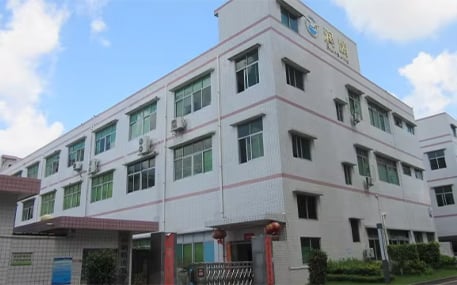
The machines are current-generation five-axis machining centres, run with trunnion rotary tables for work that has to be held on more than one face. The frame below is the outside of one cell; the one beside it is the part of the job most buyers never see — the tool entering a pocket with both coolant jets on.
This is where surface finish, burr control and edge break are decided. A housing that looks right in a catalogue but leaves a sharp edge at assembly is a cost you pay on your own line, not ours.
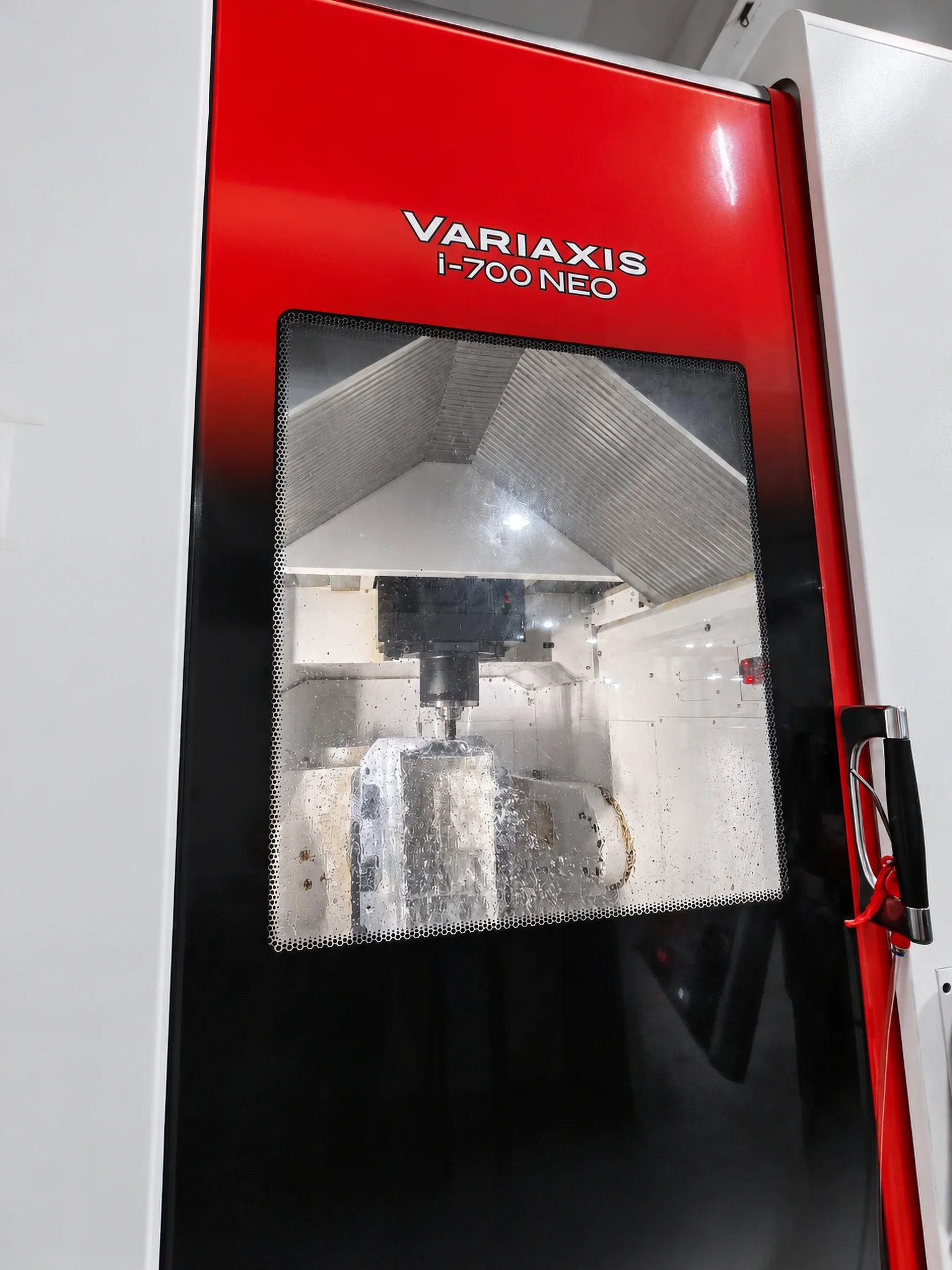
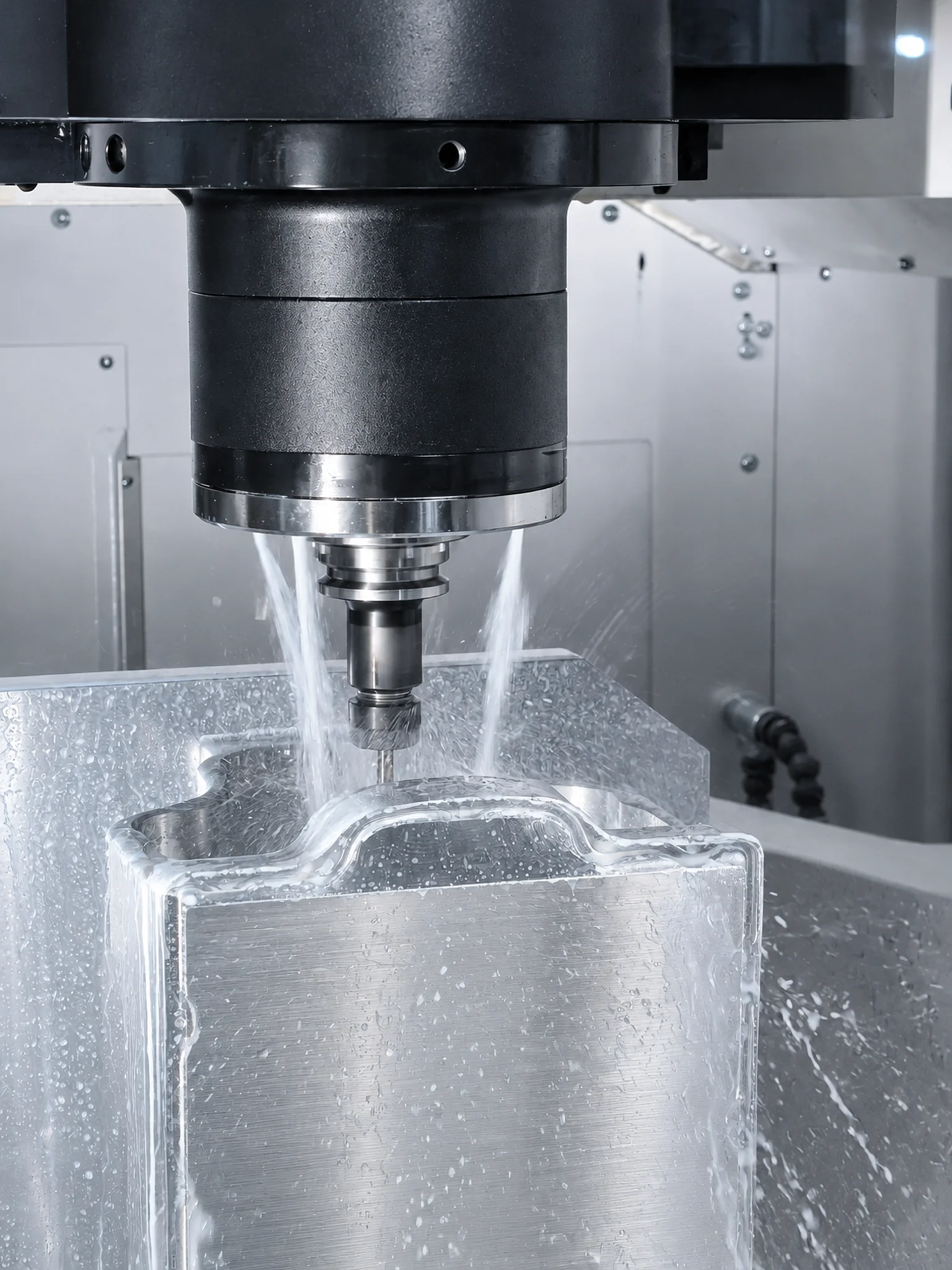
Left: the cell from the outside. Right: the cut from 300 mm, matte machined aluminium under a coolant film.
We cast the housing, machine it and finish it under one roof. That matters more than it sounds: when the casting, the fixture and the machining programme are owned by the same team, tolerances are held against the casting instead of argued across three suppliers.
Aluminium die casting (ADC12) → CNC milling and turning → deburr and edge break → surface finishing such as powder coating → inspection and packing.
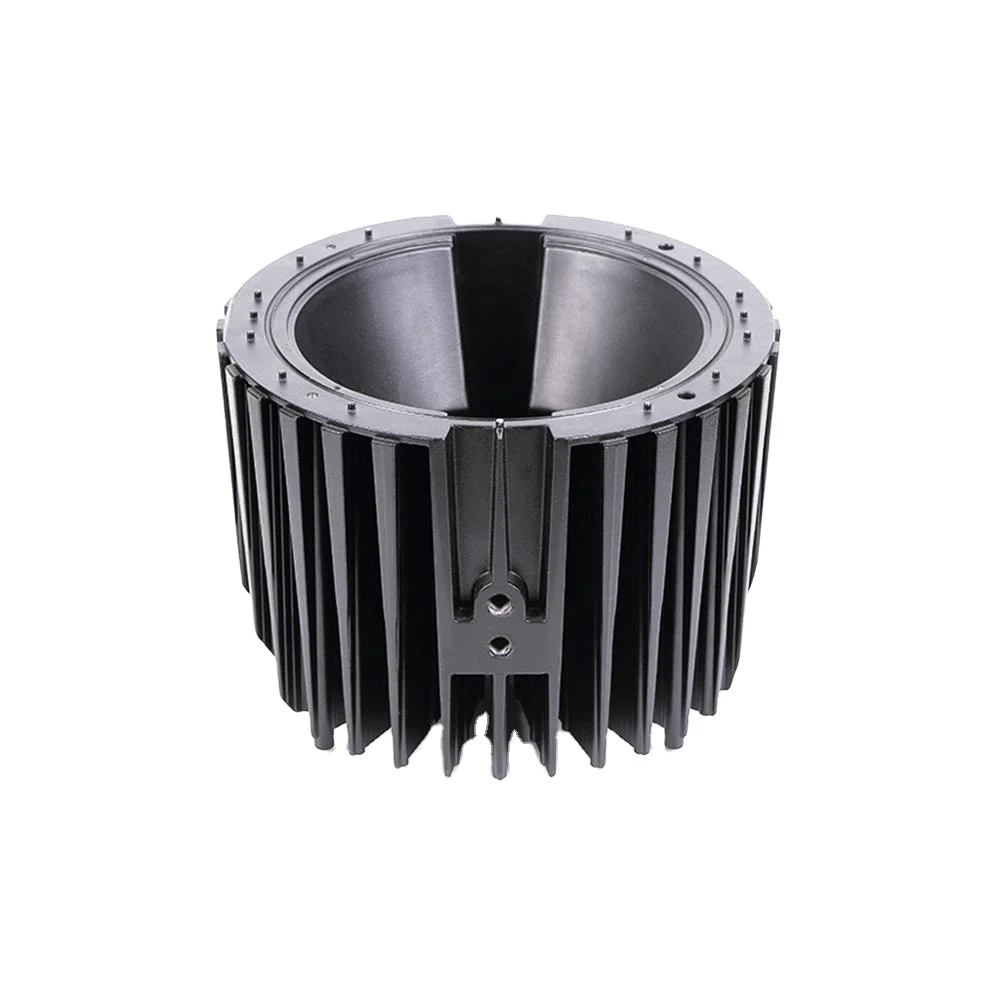
Parts that run on this route: security camera housings, heat-sink and LED housings, motor and sensor housings, brackets and structural covers. If your part is a stainless steel component, a stamped and bent enclosure or an ABS/PC moulding, it runs on a neighbouring line under the same drawing control.
Our quality system is certified to IATF 16949 and ISO 14001, and our materials and processes are RoHS compliant. In practice that means first-off inspection against your drawing, in-process checks at defined intervals, and a final dimensional report on request — the same paperwork whether the part is a first sample or a repeat order three years later.
| Process coverage | Aluminium die casting (ADC12) · CNC milling & turning · stainless steel machining · sheet metal stamping & bending · powder coating · precision injection moulding (ABS/PC) |
| Drawing formats | STEP / STP, IGES, PDF, DXF, DWG |
| Minimum order | From 1 piece — prototypes and pilot runs included |
| Sampling | Typically 15–30 days, depending on tooling |
| Mass production | Lead time quoted against your drawing, volume and finishing route |
| Working model | Custom OEM manufacturing, built to your drawing; 30+ years of OEM production |
You do not need a finished drawing set to talk to us. Send what you have and we will tell you where it will cost you money — wall thickness, draft, machining access, tolerance stack — before any tooling is cut. A change at drawing stage costs nothing; the same change after tooling costs weeks.
Send us the part that is giving you trouble
If a housing is causing assembly problems, scrap, or a supplier who keeps moving the goalposts, send the drawing plus your annual volume. You will get a manufacturability review and a quote — including where the current design is costing you money.
Email: {{EMAIL}} · WhatsApp: {{WHATSAPP}}
Shenzhen Runpeng Precision Hardware Co., Ltd. — custom die casting, CNC machining and sheet metal fabrication.
 Hot News
2026-11-23
2026-11-18
2026-11-17
2026-11-10
2026-11-09
2026-11-04
Welcome to Runpeng, a Chinese custom metal company! We provide high-quality die casting, stamping, CNC machining, injection molding and mold making services.
6th Building, No 51, Nanhuan Ave, Gongming, Shenzhen, 518106, China.
Copyright © Shenzhen Runpeng Precision Hardware Co.,Ltd. All Rights Reserved Privacy Policy Blog
 EN